English
 简体中文
简体中文


- March 13, 2026
Terrazzo Flooring Guide: Materials, Benefits, and Applications
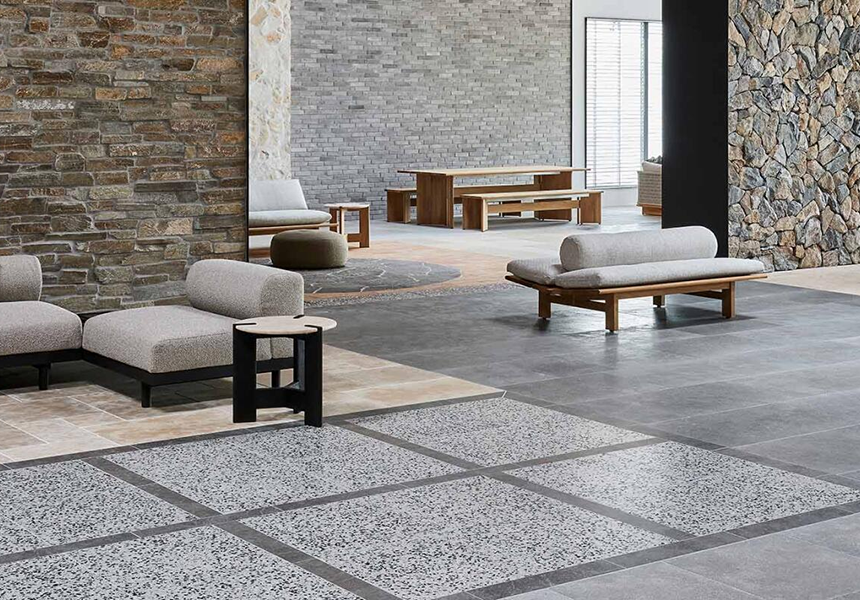
1. What Is Terrazzo Flooring?
Main components of terrazzo flooring include:
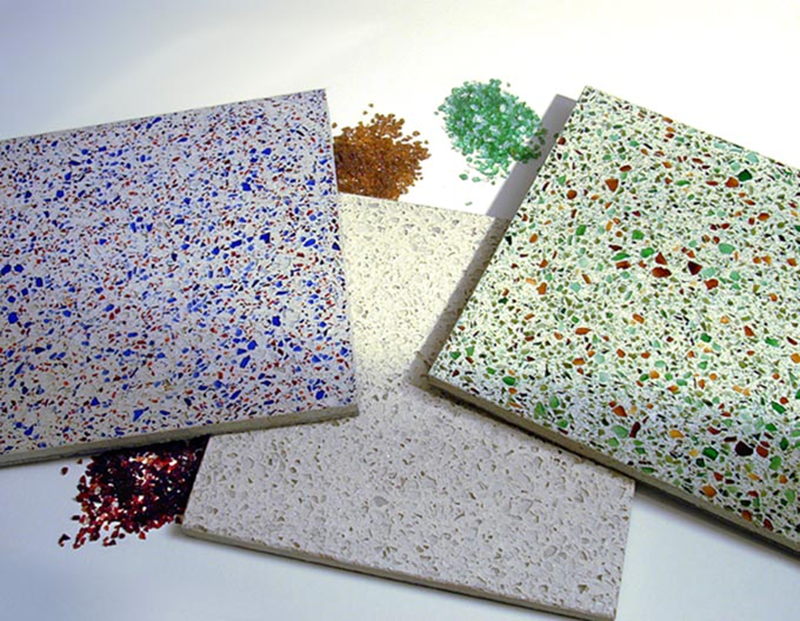
Aggregates: marble chips, quartz, granite, glass, or recycled materials
Binder: cement-based or epoxy-based resin
Finish: polished, honed, or matte surfaces
Two common terrazzo systems
Cement-based terrazzo: traditional, thicker, suitable for large architectural projects
Epoxy terrazzo: thinner, lighter, offers more color options and is widely used indoors
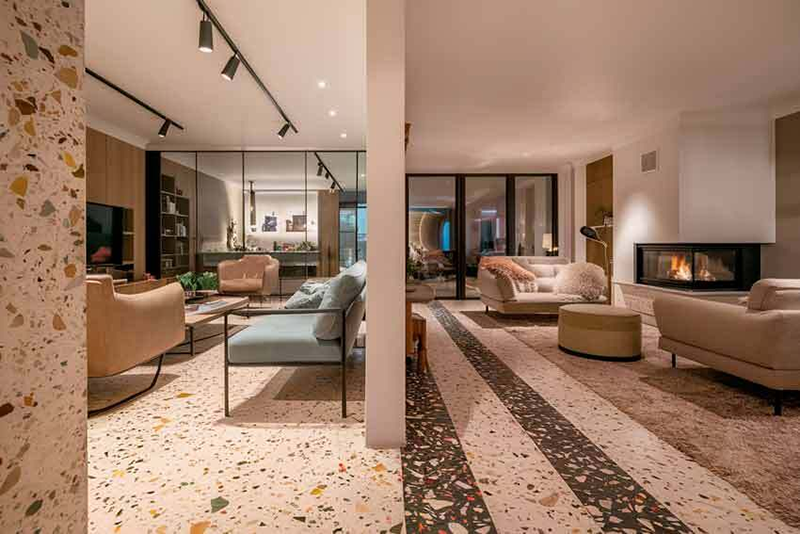
This combination of materials gives terrazzo its recognizable speckled appearance and design flexibility.
2. Key Benefits of Terrazzo Flooring
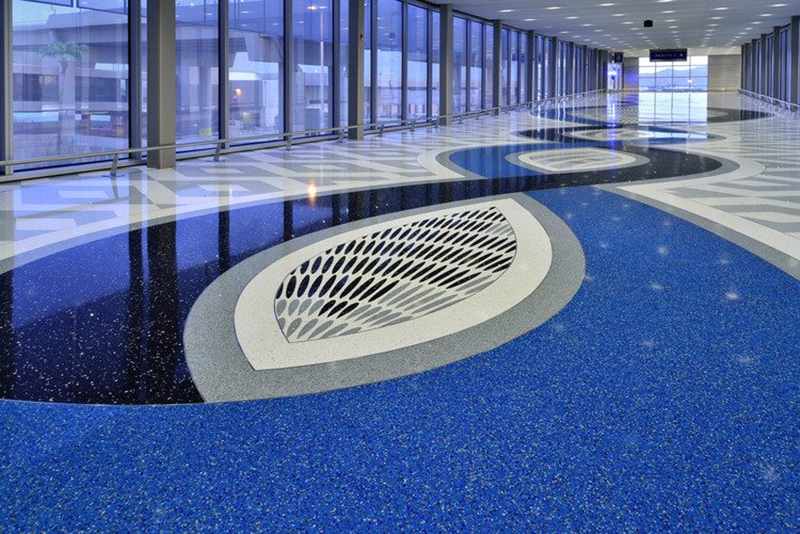
Major advantages include:
Exceptional durability
Terrazzo floors can last 50–100 years when properly maintained, making them ideal for high-traffic areas.Low maintenance
The polished surface resists stains and is easy to clean compared with many natural stones.Seamless appearance
Large poured sections reduce grout lines, creating a clean and modern look.Highly customizable design
Designers can control chip size, color, and pattern to create unique surfaces.
Because of these qualities, terrazzo is often chosen for projects where durability and visual impact are equally important.
3. Sustainable and Eco-Friendly Material
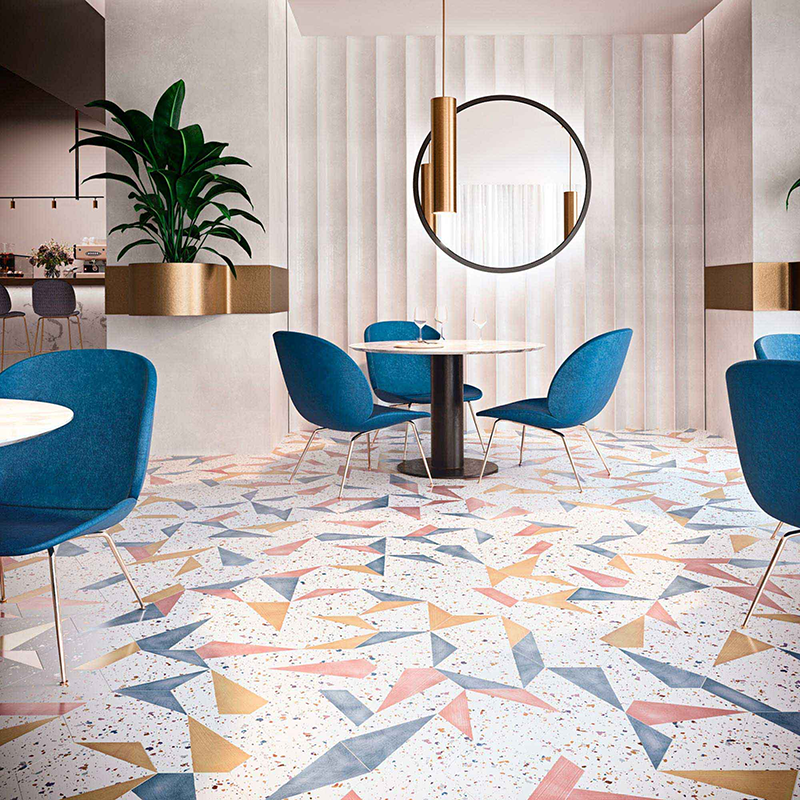
Sustainability is one of the reasons terrazzo is widely used in modern architecture and green building projects.
Environmental advantages of terrazzo include:
Use of recycled materials such as glass or reclaimed stone chips
Long lifespan, reducing replacement frequency
Low VOC epoxy options that improve indoor air quality
Compatibility with LEED-certified projects
These features make terrazzo an attractive solution for designers who prioritize environmentally responsible materials.
4. Applications in Residential and Commercial Design
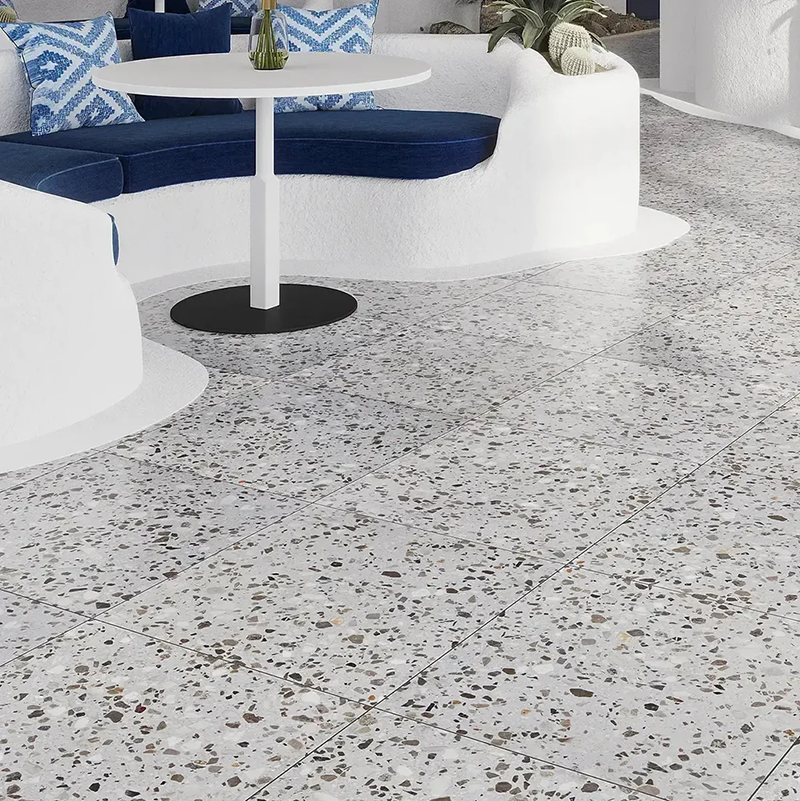
Common terrazzo applications include:
Residential spaces
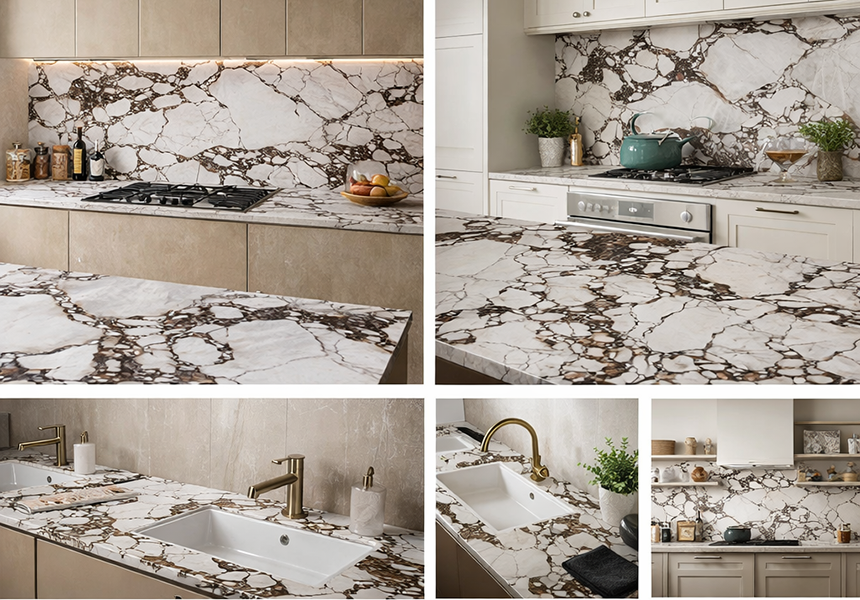
Kitchen countertops and islands
Bathroom vanities and floors
Living room flooring
Decorative wall panels
Commercial environments
Hotel lobbies
Shopping malls and retail stores
Airports and public buildings
Offices and museums
This versatility allows terrazzo to function both as a durable flooring solution and as a decorative design element.
Conclusion
Terrazzo flooring combines durability, sustainability, and design flexibility, making it one of the most versatile materials in modern architecture. Whether used in residential interiors or large commercial projects, terrazzo provides long-lasting performance while offering unique visual textures. As designers continue to seek materials that balance aesthetics and practicality, terrazzo remains a timeless choice for contemporary spaces.